
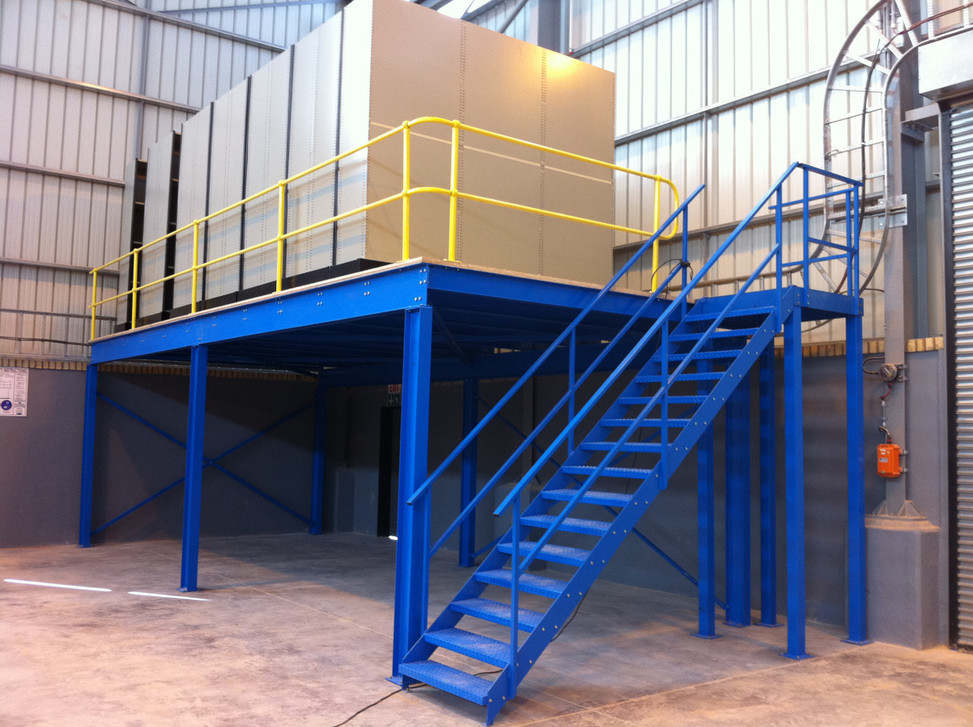
What is a Mezzanine and Why is it Important?
A mezzanine is a semi-permanent raised platform installed between the floor and ceiling of a building. Built from structural steel, mezzanines create extra floor space without changing the building’s footprint. They are widely used in warehouses, factories, retail stores, and offices where vertical space is underutilised. Mezzanines offer a faster, more affordable alternative to relocation or new construction.
Key Points
- Understand what a mezzanine is and why it’s a cost-effective way to expand space
- Learn the different types: single-tier, multi-tier, rack-supported, and shelf-supported mezzanines
- Discover factors like load capacity, decking materials, and safety features that influence design
- Explore compliance considerations including fire rating, sprinklers, and building regulations
- See how mezzanines are used in warehousing, manufacturing, retail, and offices
Types of Mezzanines
Single-Tier Mezzanine
A single-tier mezzanine is the simplest and most common type. It adds a single elevated floor level, effectively doubling usable space for storage, light production, or office areas.
Multi-Tier Mezzanine
A multi-tier mezzanine stacks multiple levels on top of each other, making it ideal for warehouses with very high ceilings. This configuration maximises cubic space and creates multiple levels of storage or workspace.
Rack-Supported Mezzanine
In a rack-supported mezzanine, the racking system itself supports the elevated floor. This design integrates pallet racking with walkable platforms, making it perfect for distribution centres with high stock rotation.
Shelf-Supported Mezzanine
A shelf-supported mezzanine uses shelving units as the structural support. It’s particularly effective for small-parts storage and industries that handle a wide variety of SKUs.
Key Considerations When Designing a Mezzanine
Load Capacity
Mezzanine floors are engineered to handle different load capacities, often ranging from 300 to 500 kg per square metre. The required strength depends on whether the mezzanine will store pallets, house offices, or support machinery.
Decking Options
Decking materials vary depending on use. Timber decking is economical for light-duty applications. Steel grating allows airflow, light, and sprinkler penetration, making it ideal for warehouses. Checker plate steel provides durability and slip resistance for heavy-duty or industrial environments.
Safety Features
Safety is non-negotiable. Standard features include handrails, staircases, and kickplates. Additional options like pallet gates, access control, and non-slip surfaces further protect staff while working at height.
Compliance and Installation Factors
Fire Rating and Sprinklers
Depending on the building code, mezzanines may need fire-rated decking or sprinkler integration. These features ensure compliance and safeguard staff and stock.
Planning Permission and Regulations
Smaller mezzanines used for storage may not require planning permission, but regulations differ by municipality. Always confirm local compliance to avoid costly delays.
Installation Timelines
Mezzanines are relatively quick to install compared to construction projects. Smaller mezzanines may be completed in 3–5 days, while larger, multi-tier projects can take 1–2 weeks once approvals and fabrication are in place.
Applications of Mezzanines
Warehousing and Distribution
In warehouses, mezzanines provide extra pallet storage, order-picking levels, or office space above the floor.
Manufacturing Facilities
Manufacturers use mezzanines for assembly lines, light production areas, or tool storage, improving workflow without extending the building.
Retail and Showrooms
Retailers use mezzanines to add stockrooms, display areas, or offices, maximising space in high-rent locations.
Commercial Offices
In office settings, mezzanines can create new meeting rooms, open-plan workspaces, or lounge areas by tapping into unused ceiling height.
Conclusion
A mezzanine is one of the smartest investments a business can make when space is limited. With options including single-tier, multi-tier, rack-supported, and shelf-supported mezzanines, businesses can scale operations without the disruption and cost of moving premises. By considering load capacity, decking materials, safety features, and compliance requirements, you can create a customised mezzanine solution that delivers long-term value. Whether for warehousing, retail, manufacturing, or offices, mezzanines are a proven way to expand space efficiently.
Mezzanine FAQs
- What is the difference between a mezzanine and a second floor?
A mezzanine is a semi-permanent, raised structure built inside an existing space, while a second floor is a permanent part of the building’s architecture. - How much weight can a mezzanine hold?
Typical mezzanines are engineered for 300–500 kg per square metre, but custom designs can be built for heavier applications. - Do mezzanines require planning permission?
Not always. Storage mezzanines often don’t require permission, but it depends on local building and fire regulations. - Can mezzanines be relocated?
Yes. Mezzanines are semi-permanent structures that can be disassembled and reinstalled in a new location if business needs change. - What decking options are available for mezzanines?
Common choices include timber for light loads, steel grating for airflow and sprinkler compliance, and checker plate steel for heavy-duty applications.