SADC Certified Exporter
Nationwide & Cross-Border Delivery
Contact us for an Obligation Free Quote
SADC Certified Exporter
Nationwide & Cross-Border Delivery
Contact us for an Obligation Free Quote
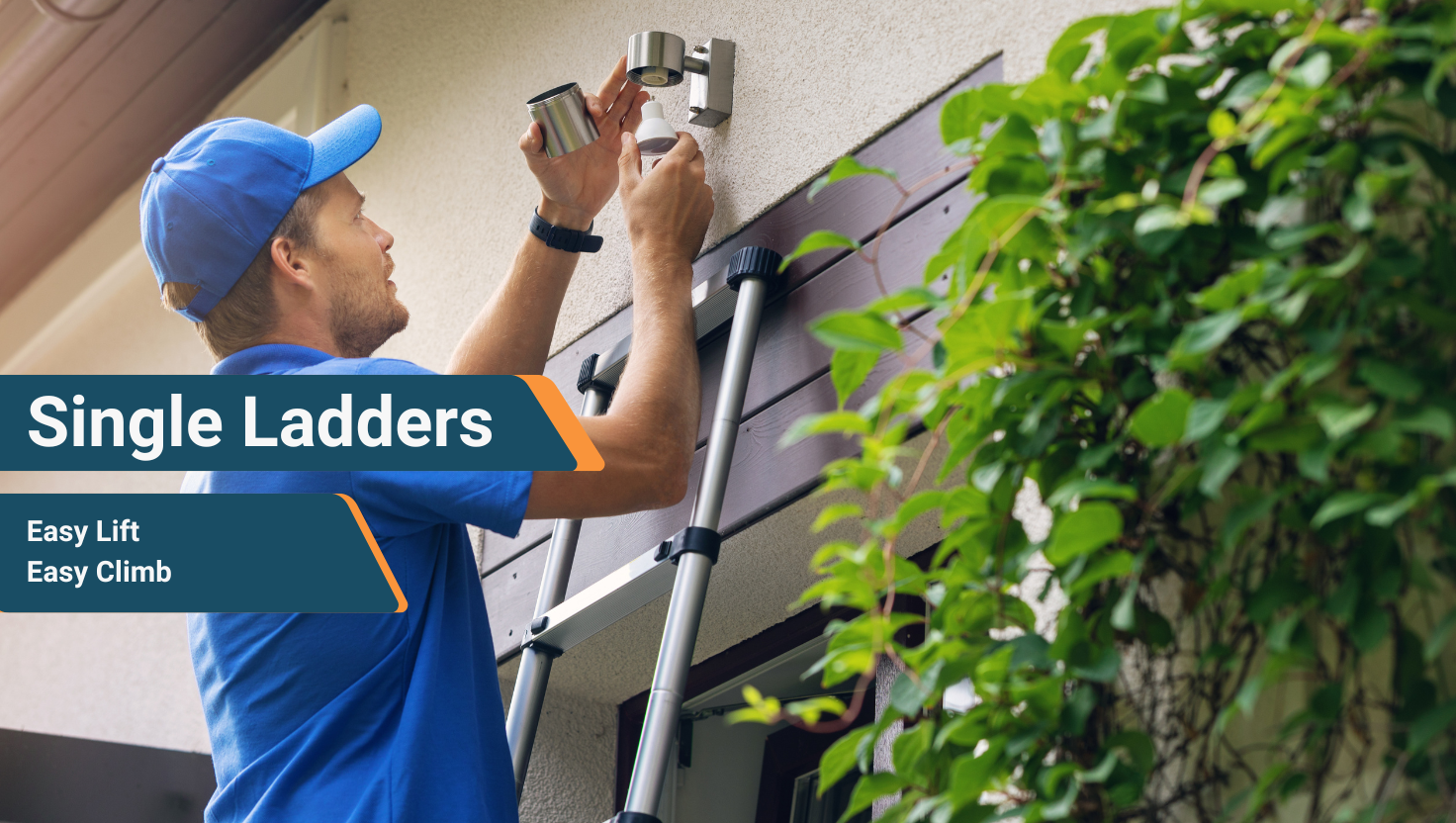
Single ladders are a type of ladder that consists of a single section, making them ideal for reaching high places where a bit of extra height is needed. These ladders are commonly used for household tasks, light maintenance work, and DIY projects. They are lightweight, portable, and easy to store, making them convenient for indoor and outdoor use. Single ladders are typically made of aluminum or fiberglass, which ensures durability and stability while using. They come in various heights to suit different needs and can be used by homeowners, professionals, and contractors alike.
South African industry never really slows down, does it? From big DCs in Gauteng to cold rooms at the coast, from mining support in Polokwane to agri processing around Mbombela, there is one humble tool that keeps showing up in every plant, every warehouse, every back-of-house corridor.
A ladder. More specifically, the quiet workhorse that nobody thinks about until something goes wrong – industrial single ladders.
Dreymar Industrial supplies Single Ladders in South Africa for factories, warehouses, hospitals, hotels, commercial property portfolios, steel manufacturers and mining support operations across the country. Not decorative gear. Serious, industrial-grade access tools that help you keep people safe while the work keeps moving.
Let's be honest. No one is fighting in a capex meeting for "better single ladders". Yet on most sites, these are the tools your people touch most often when they work at height.
They get used for:
Every one of those tasks feels small. A five-minute job. A quick climb. That is exactly why risk creeps in. Someone grabs the nearest ladder, not the right one. The feet are worn. The rails flex. The height is just a bit short, so they stretch.
Standardising on proper Single Ladders across your sites is one of those quiet decisions that cuts a lot of this risk out of your day without slowing operations down.
Here is the thing. Two ladders can look almost identical in a picture, but behave very differently on your floor. The difference lives in the details.
An industrial single ladder from Dreymar is built around:
Your teams climb with PPE, tools, scanners and sometimes product. Industrial units are designed for that frequency and weight, day after day. Cheap imports often are not.
Rung profile and spacing matter. With good rungs, boots grip properly, ankles feel supported and technicians can shift their weight without a nasty surprise. With poor rungs, every climb feels like a gamble.
When rails flex, people wobble. When rails stay firm, people work calmly. Industrial rails are sized and built to stay true when someone leans to the side to reach a fitting or junction box.
South African floors are not "lab clean". You have:
Good ladder feet keep contact and reduce sliding, even when the floor is not perfect.
Put all this together and your industrial single ladders stop being "something in the corner" and start being reliable tools you can write into your procedures with confidence.
You know what often gets rushed? Deciding which material you should use. It looks like a pure price question, but it is really a risk and environment question.
Aluminium Ladders are light, strong and a solid choice for general industrial use:
Because aluminium is light, staff move the ladders quicker and with less fatigue. Because it resists rust, it works well in coastal regions like Durban, Cape Town and Single Ladders in Gqeberha (Port Elizabeth), provided storage is sensible.
Whenever you are working near live electrical equipment, the conversation changes. Fibreglass Ladders offer non conductive side rails that help protect workers around:
Most serious operations run a blended fleet: aluminium for general access, fibreglass reserved and clearly tagged for electrical tasks. That mix works just as well in a head office server room in Pretoria as it does in an automotive plant in Gqeberha.
Buying "a few different sizes" is not a strategy. Matching heights to actual tasks is.
When Dreymar helps you spec Single Ladders in South Africa, the conversation usually touches on:
From that, you can build a short, sensible list of ladder sizes that cover 90% of your tasks without encouraging stretching or "one foot on the top rung" behaviour.
Here's the thing. Single ladders are fantastic for some tasks and completely wrong for others. The trick is to be clear on both.
They are ideal for:
For many tasks, other gear from Dreymar's range of Ladders is the safer answer:
Once that "who uses what, where" map is clear, supervisors stop arguing about ladders in the aisle and simply apply the rules.
Dreymar does not only support one city. Your access strategy can stretch across the country. Here is how Single Ladders slot into different hubs.
The point is simple. Your ladder spec does not have to change flavour every time you cross a provincial line. You can carry one well thought through approach across the country and tweak only where environment demands it.
This is where the conversation becomes less about products and more about how your people actually work. Dreymar's process is practical, not theoretical.
You talk through things like:
No long essays. Just enough detail to see the recurring patterns.
Together, you build a simple task map:
Supervisors can then turn that into simple rules and toolbox talks that make sense on the floor.
Once task groups are clear, Dreymar helps trim your ladder list down to a small, repeatable set of models:
You get coverage without clutter.
Because the ladders are clearly specified, it is much easier to:
You are not just saying "work safely at height". You are showing how.
If you walked your main facility right now and looked only at access gear, a few simple questions would tell you a lot:
If the answers are messy, that is not unusual. It just means your access gear has grown organically as the business grew.
Honestly, no one builds a career on "sorted out the ladders", but a bad fall from the wrong ladder can land in board packs, client reports and insurance discussions for years. It is one of those topics that only becomes visible when something has gone wrong.
By working with Dreymar Industrial on Single Ladders in South Africa you get:
In short, you move from "whatever ladders we have lying around" to a deliberate, defendable system that keeps your teams safer and your operations running smoother.
When you are ready to tidy up that part of your safety and maintenance story, starting with well specified industrial single ladders across South Africa is a surprisingly powerful step in the right direction.
