
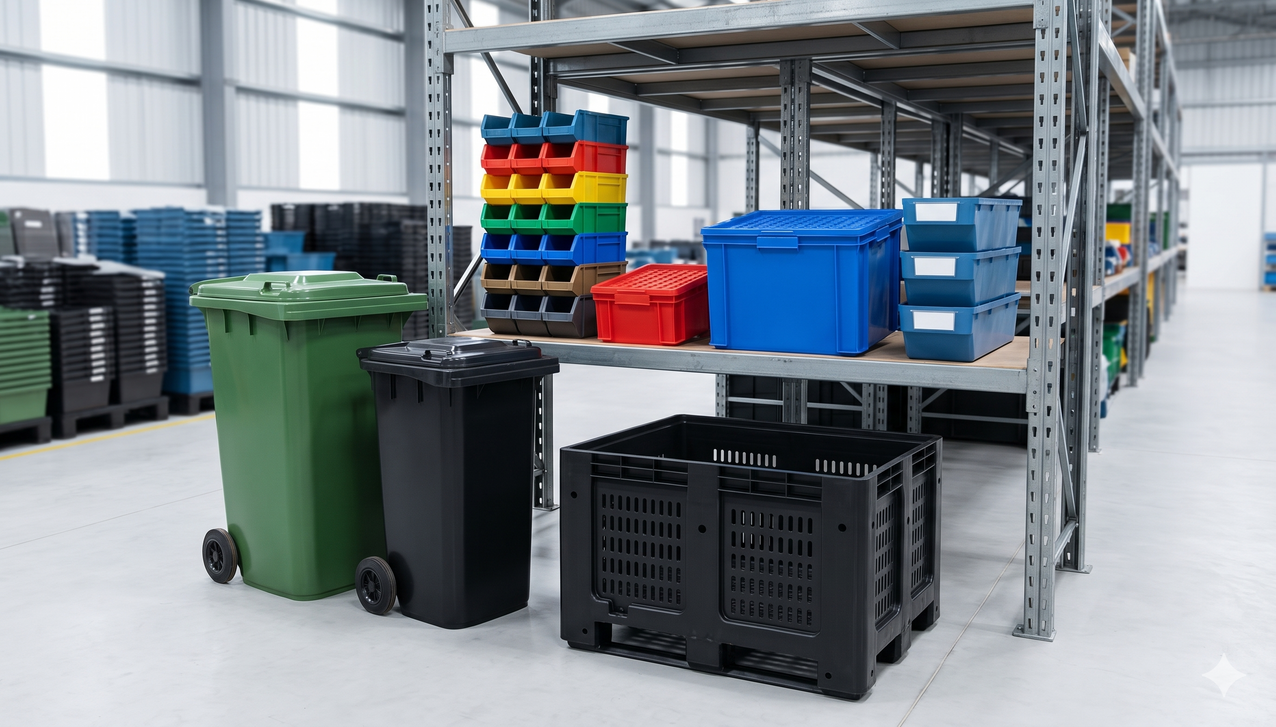
Cape Town has that mix of serious industry and high standards. You’ve got logistics and warehousing, food and beverage operations, cold rooms, hospitals, hotels, and commercial property teams that need things to look neat and work fast. People notice the details here. Sometimes that’s annoying. Sometimes it’s a gift.
Because when standards are high, storage needs to be simple, clean, and repeatable.
That’s where Bins earn their keep. Not as plastic containers, but as a practical control system. Stock has a home. Labels make sense. People pick faster. Housekeeping stays easier. And those “temporary piles” don’t get to become permanent.
Dreymar Industrial supplies industrial Bins across Cape Town for factories, warehouses, mines, hospitals, hotel groups, commercial property groups, and industrial sectors including steel manufacturers and steel suppliers. If you’re sourcing bins for a Cape Town site, this is the setup you want: reliable, consistent, and built for day-to-day handling.
Cape Town’s reality: cleanliness, compliance, and cold-room thinking
Here’s the thing. A lot of Cape Town operations care about hygiene and traceability. FMCG, food processing, hospitality, healthcare, even certain distribution centres, they all run with tighter rules. People ask questions like “Is it clean?” and “Is it labelled?” before they ask “Is it cheap?”
So your storage needs to support:
- easy wipe-down surfaces
- clear identification and labelling
- repeatable layout across shifts
- stable stacking for handling and staging
- quick access for frequent picks
Plastic bins fit that environment well, especially when you stop treating them as “containers” and start treating them as part of the workflow.
What a proper bin system gives you (besides a neat storeroom)
You know what? A neat storeroom is nice, but the real payoff is speed and accuracy.
A good bin setup helps you:
- reduce pick time (less searching, fewer mistakes)
- improve stock accuracy (cycle counts become realistic)
- support hygiene routines (big for food, healthcare, hospitality)
- reduce stock damage (less rattling around in cartons)
- keep walkways clear (safety and housekeeping win)
And if you’re running multiple Cape Town sites, or linking Cape Town to other cities, standardisation becomes a quiet advantage. Same bins, same labels, same logic.
Choosing the right bins for Cape Town operations (simple logic, strong results)
Let me explain the easiest way to choose: match the bin to what you’re storing and how often it moves.
Small parts and spares: Lin Bins
If you store fasteners, fittings, seals, bearings, electrical connectors, and maintenance spares, Lin Bins usually form the backbone of a store.
They’re ideal for:
- maintenance cages and workshops
- production line replenishment points
- spares stores supporting industrial operations
- facilities maintenance stock (especially in commercial property)
Quick digression: the most expensive part is often the missing one. Lin bins reduce that “we had it yesterday” problem because items stay visible and easy to count.
Kitting, WIP, and internal movement: Tote Bins
If you’re building kits for planned maintenance, staging components for production, moving items between stations, or handling returns, Tote Bins keep things together and easy to transport.
They work well for:
- planned maintenance kits
- FMCG line-side staging
- dispatch consolidation
- returns and rework lanes
Totes bring discipline without drama. When a kit has a home, it’s less likely to “go missing” in plain sight.
Quick-access shelving: Shelf Bins
If you’ve got shelving and frequent picks, Shelf Bins keep items visible and accessible without constant unpacking.
They’re commonly used in:
- warehouse stores with high pick rates
- hospitals and clinics (clear ID matters)
- hotel back-of-house maintenance stores
- facilities teams managing multiple categories
Shelf bins also help with training. New staff can follow the layout without needing tribal knowledge.
Wall storage and visual organisation: Linbin Panels
If floor space is tight (and in Cape Town, it often is), wall space can save you. Linbin Panels turn walls into organised, visible storage.
Great for:
- workshops and technician bays
- inspection and quality stations
- assembly benches
- consumables near the job
It’s like putting your “always-used” items on a tidy spice rack. You can see what’s low immediately.
Waste handling and hygiene: Wheelie Bins
Waste management is a big deal in Cape Town, especially where hygiene standards are high and shared property sites are common. Overflow doesn’t just look bad, it becomes a compliance and pest risk.
Wheelie Bins support:
- packaging waste in warehousing and FMCG
- general refuse for industrial sites
- controlled waste points for hospitals and hospitality
- yard and loading bay waste stations
Clean waste control is one of those quiet markers of a well-run site.
Handling and stacking goods: Plastic Crates
If goods are being moved, staged, and stacked daily, Plastic Crates are a dependable workhorse.
They’re used for:
- inbound sorting
- dispatch staging
- stable stacking for heavier items
- back-of-house storage in hospitality and facilities
Crates keep items contained, stackable, and easier to track. That’s the advantage.
“We already have bins” (and still, the storeroom feels messy)
This is common, even in well-managed Cape Town operations.
A site might have some containers, some cartons, and a few bins. Technically, storage exists. But if the system isn’t consistent, stock drifts, labels disappear, and clutter builds.
Here’s the mild contradiction: you don’t always need more bins. You need fewer types and better rules.
A workable system includes:
- consistent bin families and sizes
- clear labels (SKU, description, min-max, location)
- fixed locations (so items don’t migrate)
- a replenishment method (two-bin or min-max)
- a returns or quarantine lane (so returns don’t mess up the room)
Once those are in place, the storeroom stays organised even during peak periods.
Layout tips that work especially well in Cape Town sites
Because many Cape Town operations care about flow and cleanliness, layout should reduce walking and reduce mess.
A few practical moves:
- keep fast movers near issuing or dispatch
- group items by task (electrical, mechanical, cleaning) rather than supplier
- create a kitting zone with totes (stops kits being built everywhere)
- use wall panels near benches for consumables
- set up a returns lane or quarantine area (returns can wreck order if they float)
And if you run multiple facilities, standardise layouts where you can. Staff transfers happen. Your stores shouldn’t feel like a brand-new puzzle each time.
Supporting Cape Town, plus national supply for multi-site buyers
Many Cape Town buyers also manage other sites across the country. Dreymar supports major centres, including:
- Bins in Johannesburg for high-volume DCs and manufacturing
- Bins in Pretoria for industrial parks and facilities-heavy operations
- Bins in Durban for port-linked warehousing and high turnover operations
- Bins in Mbombela (Nelspruit) for regional operations and agricultural supply
- Bins in Gqeberha (Port Elizabeth) for Eastern Cape industry support
- Bins in Bloemfontein for central distribution
- Bins in East London for manufacturing support and warehousing
- Bins in Pietermaritzburg for inland KZN facilities
For consistent selection and national standardisation, use Bins in South Africa as your main category reference.
And if you’re rolling out in Gauteng and Limpopo too, many buyers pair Cape Town procurement planning with Bins in Centurion and Bins in Polokwane depending on their footprint.
A quick spec checklist (so you can order cleanly)
Before you place your order, answer these five questions:
- What are you storing: small parts, bulk items, WIP, waste, or dispatch goods?
- How often is it handled: daily picks or occasional access?
- Where will it live: shelves, racks, walls, cages, trolleys?
- Do you need labels or scanning: barcode, QR, or simple visual tags?
- Are you standardising across sites: yes or no?
Those answers make bin selection straightforward.
Ready to get your storage under control?
If your storeroom is cluttered, slow, or inconsistent, don’t aim for perfect. Aim for repeatable. That’s what holds up in real operations.
Start with Bins in Cape Town and build a system using proven categories: Lin Bins for small parts, Tote Bins for kitting and movement, Shelf Bins for quick-access shelving, Linbin Panels for wall organisation, Wheelie Bins for waste control, and Plastic Crates for handling and stacking.
Because when storage is sorted, the site feels calmer. Picks go faster. Audits become easier. And in Cape Town, where standards are high and people notice the details, that kind of tidy efficiency is exactly what you want.